
Share Dr. Kuang Shan Lin 林光善's obituary with others.
Invite friends and family to read the obituary and add memories.
Stay updated
We'll notify you when service details or new memories are added.
You're now following this obituary
We'll email you when there are updates.
Select your format and elements to print

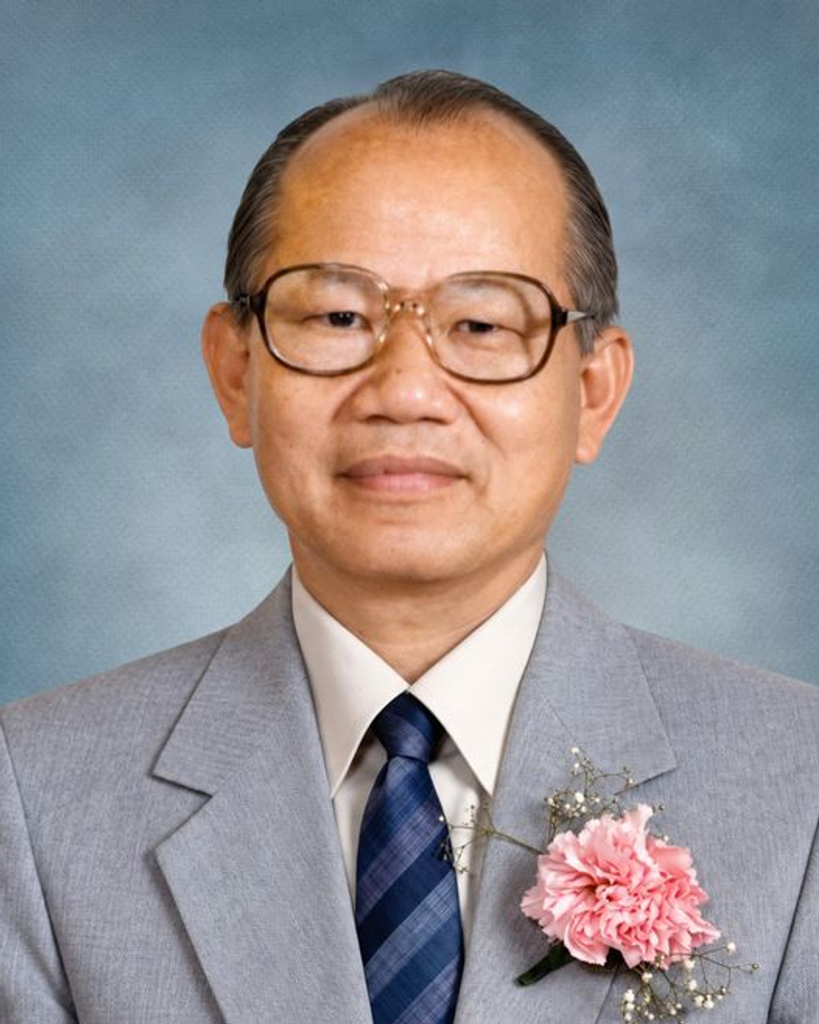
Dr. Kuang Shan Lin 林光善

Dr. Kuang Shan Lin 林光善
Sep 1, 1927 — Sep 13, 2026
Monterey Park, California
Dr. Kuang-Shan Lin, known lovingly to his grandchildren as YehYeh, passed away on September 13, 2026 in Monterey Park, CA at the age of 99. A physician, immigrant, husband, father and grandfather, he lived an extraordinary life shaped by perseverance, education, service and devotion to his family. His journey carried him across China, Vietnam, Taiwan, Nigeria and the United States, and the choices he made along the way created opportunities for generations to come.
Kuang-Shan was born into a distinguished lineage on September 1, 1927 with deep roots in both China and Vietnam. He was the great-grandson of Lin Mu-Ming (林穆铭 / Lâm Mục Minh), who lived for many years in central Vietnam and became wealthy through commerce during the late Qing dynasty. Lin Mu-Ming returned to Quexiang Village, Guangdong Province in 1859 to build the family’s ancestral residence, known as the Rulin Mansion. Kuang-Shan’s grandfather, Lin Yu-Chang (林裕昌), was the son of Lin Mu-Ming’s Vietnamese wife Đặng Thị Ngân (鄧氏銀). Kuang-Shan was a beloved son of the late Lin Wan-Long (林万隆) and Chen Xiu-Xi (陈琴惜) and one of five siblings.
Kuang-Shan’s childhood was transformed in 1937 amid the outbreak of the Second Sino-Japanese War. As the Imperial Japanese Army launched air-raids and coastal blockades tightened across southeastern China, Lin Wan-Long made the choice to leave China. He took Kuang-Shan and his younger brother, the late Lam Quang Chon (林光正), and fled to Vietnam by sea. His mother and sisters remained behind in their ancestral village in China.
In Vietnam, Kuang-Shan, his brother and his father joined his great-aunt, Lâm Tố Liên. Known locally as Bà Tư Nói, she was a local legend who rose from selling betel nuts in the market to owning nearly a thousand acres of prime rice land. Based in Gò Công, she never married and had no direct heirs. Instead, she dedicated much of her immense wealth to supporting her extended family.
Kuang-Shan completed his elementary and junior high school education in Vietnam. But by the early 1940s, Japan had occupied Vietnam and the French colonial administration had effectively banned standalone Chinese senior high schools. With local educational avenues blocked, any Chinese young man aspiring to a university degree was forced to return to mainland China to complete his high school education.
In 1942, at the age of sixteen, Kuang-Shan left Vietnam to embark on a journey back to China. Because WWII had brought war to the South China Sea, the only way was overland. Organized into a “classroom evacuation” by their school, Kuang-Shan set out on foot with his teachers and classmates. It was a trek of over 1,000 miles through mountainous terrain, dense jungle, and active war zones, highly vulnerable to malaria, bandits, and checkpoints manned by French, Japanese, or local guerrilla forces. The students carried everything they needed to survive, including food, clothing, school papers, and other supplies, on their backs and heads. At the northernmost edge of Vietnam, they had to climb the limestone mountains of Lang Son to cross over the border.
After crossing into China, Kuang-Shan received assistance from the Nationalist government to finish his high school education. Graduating penniless, he applied for government-funded military programs, including military police and nursing. During the admission interview, he was told that only women applied to be nurses and he was encouraged to pursue a medical track. Subsequently, he was accepted into the National Defense Medical University and began training to become a physician. As the wartime conflict shifted, the medical school, its instructors, and its students moved through different parts of China to evade the front lines. In 1949 when the Chinese Civil War ended in a Nationalist defeat by Mao Zedong’s Communist forces, Chiang Kai-shek transported the medical school and its students to Taipei, Taiwan.
In Taiwan, Kuang-Shan completed medical school and became a pediatrician. It was through his medical practice that he met his future wife, Hui-Chuan, an elementary school teacher. While caring for her hospitalized father, Kuang-Shan struck up a friendship with him. The two men discovered a deep connection: their families originated from the same region in China and spoke the same local dialect. Kuang-Shan and Hui-Chuan married in 1958 and went on to have two children, John CJ Lin and Wenny Lin. They lived in the Songshan district of Taipei.
By the early 1960s, Kuang-Shan’s obligatory Taiwanese government service was complete. Across the Pacific, the United States was facing a severe domestic doctor shortage and was aggressively recruiting top-tier Foreign Medical Graduates through a special visa track. In 1963, Kuang-Shan flew to Texas and completed a prestigious pediatric residency, earning U.S. clinical credentials and paving the way for later immigration. Kuang-Shan returned to Taiwan after his medical residency to raise his family. He continued sending letters and money to his mother and sisters trapped behind the Maoist Iron Curtain in China, protecting them from poverty despite the persecution they endured as landowners.
By the 1970s, Taiwan was gripped by geopolitical panic. Ousted from the UN and seemingly abandoned by the U.S., residents of Taiwan feared an imminent communist invasion. To protect his children, Kuang-Shan looked for opportunities to move his family abroad. In 1974, Kuang-Shan took the post of Head Physician at the Hong Kong-owned textile factory United Nigerian Textiles Limited (UNTL) in the booming northern city of Kaduna, Nigeria. As one of the largest vertically integrated textile mills on the entire African continent, the facility employed roughly 9,000 Nigerian workers and housed a community of 300 Chinese families within the company’s gated compounds. Kuang-Shan relocated his family to Kaduna, but after a few years he found the local schools inadequate and sent his children to be educated in Southern California and Canada.
After living and working in Nigeria for several years, Kuang-Shan applied for a United States Green Card and immigrated permanently to the United States in 1977. He and his family first settled in Flushing, New York. Later, they moved to Spring Valley, New York, a peaceful, suburban community nestled in Rockland County. Kuang-Shan earned his New York State medical and surgical license in 1979. Leveraging his status as a U.S. permanent resident and New York state physician, Kuang-Shan used the U.S. Refugee Act to formally sponsor his brother’s family’s immigration to the United States as they fled Vietnamese communist persecution.
Kuang-Shan spent the remainder of his distinguished career employed by the State of New York in government-funded public institutions serving children and young adults facing severe mental health crises. He retired in 1992 at the age of sixty-five. Shortly afterward, he and Hui-Chuan joined their son in California, residing over the years in Cerritos, La Palma, and Monterey Park. Hui-Chuan, his beloved wife of 68 years, passed away in the spring of 2026 in Monterey Park.
To his patients, Kuang-Shan was Dr. Lin. To his family, he was YehYeh. He played a vital role in raising his three grandchildren during their early childhood and spent many summers and school breaks caring for them. He also taught them something enduring: the conviction that hardship can be met with education, discipline, hard work, perseverance, resilience and courage, while always showing kindness and care for others.
Kuang-Shan lived an exemplary life, marked by dedication to his family and generosity and kindness towards others. He instilled the values of fairness, hard work and gratitude in his children and grandchildren. The success, stability and opportunities enjoyed by his children, grandchildren, and great-grandchildren are owed to his foresight, planning and the sacrifices he made. His descendants are his greatest legacy, and the story of his life will continue through them.
Kuang-Shan is survived by his children, John CJ Lin (Ching, Tina) and Wenny Lin (John); his grandchildren, Jennifer (Alex), Jonathan (CiCi) and James; his great-grandchildren, Asher, Noah and Finn; his youngest sister Lin Rou-Hao (林柔好) of Mianyang, Sichuan Province and many more extended family members in the U.S. and worldwide.
Webcast Link: https://streaming.forestlawn.com/76127688
Service Schedule
Past Services
Funeral Service of Kuang Shan Lin
Saturday, October 17, 2026
11:00 am - 12:00 pm (Pacific time)
Forest Lawn - Cypress - Church of Our Fathers
Livestream
Guestbook

This site is protected by reCAPTCHA and the
Google Privacy Policy and Terms of Service apply.
Service map data © OpenStreetMap contributors
© 2023 Forest Lawn Memorial-Park Association
FOREST LAWN MEMORIAL-PARKS & MORTUARIES | Arcadia - FD 2186 | Cathedral City - FD 1847 | City of Industry - FD 2121 | Coachella - FD 640 | Covina Hills - FD 1150 | Cypress - FD 1051 | Glendale - FD 656 | Hollywood Hills - FD 904 | Indio - FD 967 | Long Beach - FD 1151 | Whittier - FD 2302
We respect your privacy and will not sell your personal information. Forest Lawn will collect and use the information you provide here to periodically email, call, text or message you with information about products, services, and events according to the terms of the Forest Lawn Privacy Policy and Terms of Use until you change your communication preferences at www.forestlawn.com/preferences.
Health Insurance Coverage Transparency
Cigna • Kaiser